Have Mercy
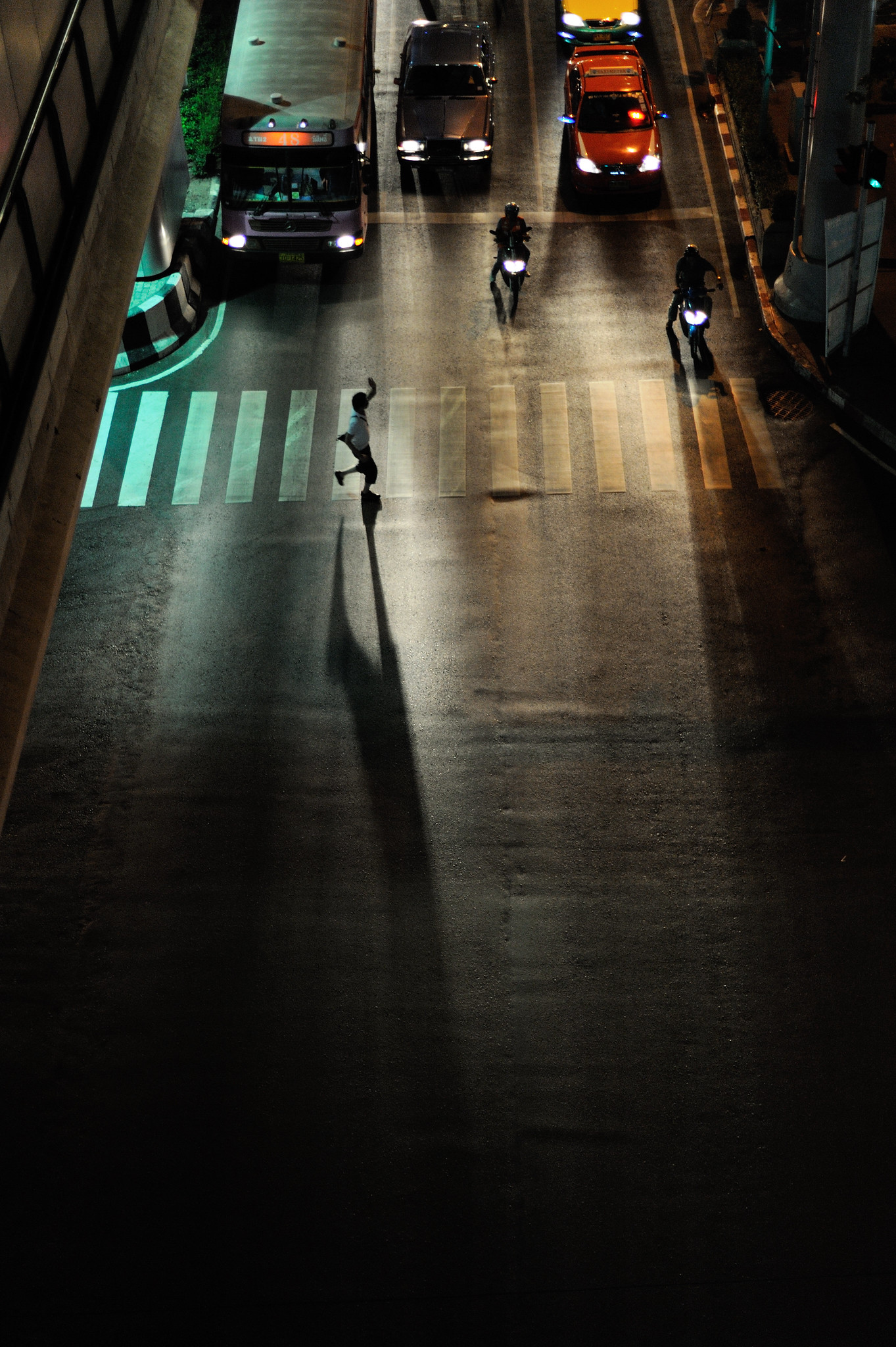
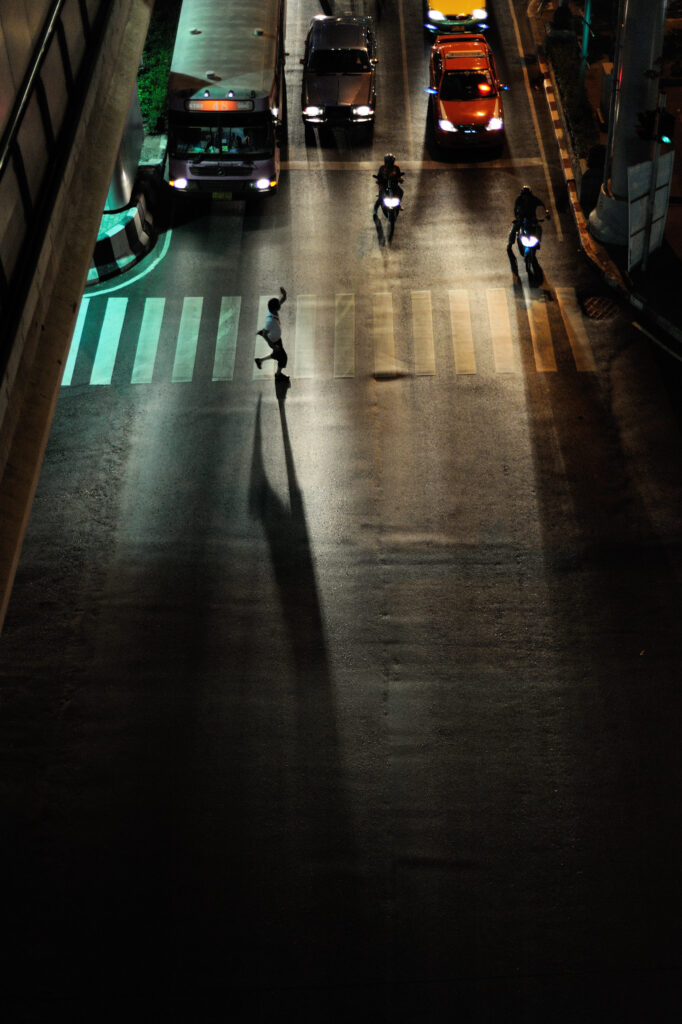
Avenue Sukhumvit, 1er mai 2012, depuis la station de BTS Ploen Chit. J'étais venu tenter de « prendre » la bizarrerie fantomatique des ombres projetées sur l'asphalte par les grappes de passants. Ces derniers ne sont autorisés à passer que par essaims et quelques secondes seulement, au prix d'une longue attente, avec un arrêt systématique de plusieurs minutes sur le terre-plein central, entre les deux voies et les hurlements des moteurs. Au moment précis où, parvenu petit à petit aux bons réglages, j'allais abandonner après le passage d'une grappe (lassé moi-même d'attendre autant), l'homme en retard s'est lancé alors que ça allait passer au vert pour les véhicules. Il savait forcément qu'ils démarreraient en trombe, passant ou pas.
À Bangkok, on regarde davantage les feux des autres voies que la sienne, autant pour anticiper le départ le plus rapide possible que pour éviter de se faire faucher. D'où ce geste du bras levé, que j'ai vu tant de fois depuis ici, et que j'ai fini par inscrire dans mes réflexes de survie en tant que piéton. C'est le principal moyen, semble-t-il, de rappeler que les nantis motorisés doivent, à défaut de jamais respecter le moindre panneau de circulation, céder au moins à des règles humaines élémentaires. Elles ont presque l'air, face à autant de métal, de verre et de béton, de nous renvoyer à une autre époque : une sorte de pitié élémentaire, fonctionnelle, le plus souvent réservée aux femmes avec enfants, aux vieux, et que seul un coup de sifflet ou une menace peut (non pas provoquer, mais) imposer comme un devoir.
J'ai eu l'impression que cette photo résumait la violence à l'œuvre en permanence dans ce pays, et qu'elle pouvait être transplantée dans le domaine social. Une autre technique que j'utilise pour faire s'arrêter les voitures est de faire semblant de filmer : la menace d'un procès fonctionne mieux que la confiance en une hypothétique pitié — qui rarement existe : c'est pourquoi elle ne peut advenir que par l'injonction, par un rappel impérieux venu du prêtre, du flic, de l'homme puissant qui dispose d'une armée d'avocats ou d'une arme.
Sukhumvit Avenue, 1 May 2012, from Ploen Chit BTS station. I had come to try to capture the ghostly strangeness of shadows cast on the asphalt by clusters of pedestrians. They are only allowed to cross in swarms, for a few seconds at a time, after a long wait — with a mandatory stop of several minutes on the central median, between the two lanes and the screaming of engines. At the precise moment when, having finally dialled in the right settings, I was about to give up after one group had passed (worn out by the waiting myself), the man running late stepped out just as the lights were about to turn green for the vehicles. He must have known they would surge forward regardless.In Bangkok, people watch the lights on the other lanes more than their own — both to anticipate the fastest possible start and to avoid being hit. Hence that raised-arm gesture I have seen so many times here, and which I have now built into my own survival reflexes as a pedestrian. It seems to be the main way of reminding motorised commuters that they must, if not respect any traffic sign, at least yield to elementary human rules. Faced with so much metal, glass and concrete, those rules almost seem to belong to another era: a kind of elementary, functional mercy, most often reserved for women with children or the elderly — one that only a whistle or a threat can (not provoke, but) impose as a duty.I felt this photograph captured the violence permanently at work in this country — and that it could be transposed to the social sphere. Another technique I use to stop cars is to pretend to film: the threat of a lawsuit works better than trusting in some hypothetical mercy — which rarely exists: which is why it can only come through injunction, through an imperious reminder from a priest, a cop, a powerful man with an army of lawyers or a weapon.
ถนนสุขุมวิท วันที่ ๑ พฤษภาคม พ.ศ. ๒๕๕๕ จากสถานี BTS เพลินจิต ฉันมาที่นี่เพื่อพยายามบันทึกความแปลกประหลาดอันเหมือนวิญญาณของเงาที่ทอดลงบนพื้นยางมะตอยจากฝูงคนเดินเท้า พวกเขาได้รับอนุญาตให้ข้ามถนนได้ทีละฝูง เพียงไม่กี่วินาที หลังจากการรอคอยอันยาวนาน โดยต้องหยุดพักบนเกาะกลางถนนหลายนาทีทุกครั้ง ท่ามกลางสองเส้นทางจราจรและเสียงคำรามของเครื่องยนต์ ในช่วงเวลาพอดิบพอดีที่ฉันปรับตั้งกล้องได้ถูกต้องในที่สุด และกำลังจะยอมแพ้หลังจากกลุ่มหนึ่งผ่านไปแล้ว (ด้วยความเหนื่อยหน่ายจากการรอคอยเช่นกัน) ชายที่มาสายคนนั้นก็ก้าวออกมาในขณะที่สัญญาณไฟกำลังจะเปลี่ยนเป็นสีเขียวสำหรับรถยนต์ เขาต้องรู้ดีว่ารถจะพุ่งออกไปอย่างรวดเร็ว ไม่ว่าจะมีใครอยู่หรือไม่
ในกรุงเทพฯ ผู้คนมักจับตาดูสัญญาณไฟในช่องทางอื่นมากกว่าช่องทางของตนเอง ทั้งเพื่อคาดเดาการออกตัวที่เร็วที่สุดและเพื่อหลีกเลี่ยงการถูกชน นั่นคือที่มาของท่าทางยกแขนขึ้นนั้น ซึ่งฉันเห็นบ่อยครั้งมากที่นี่ จนได้สร้างมันเป็นสัญชาตญาณเอาชีวิตรอดของตัวเองในฐานะคนเดินเท้า ดูเหมือนว่านี่คือวิธีหลักในการเตือนผู้ขับขี่ว่าพวกเขาต้องยอมแพ้ หากไม่เคารพป้ายจราจรใดเลย อย่างน้อยก็ต้องยอมต่อกฎเกณฑ์ของมนุษย์ขั้นพื้นฐาน เมื่อเผชิญกับโลหะ แก้ว และคอนกรีตมากมายขนาดนี้ กฎเหล่านั้นดูเกือบจะเหมือนมาจากยุคอื่น นั่นคือความเมตตาเบื้องต้นที่ใช้งานได้จริง ส่วนใหญ่สงวนไว้สำหรับผู้หญิงที่มีลูกหรือผู้สูงอายุ และมีเพียงเสียงนกหวีดหรือการขู่เข็ญเท่านั้นที่จะ (ไม่ใช่กระตุ้น แต่) บังคับให้มันเกิดขึ้นในฐานะหน้าที่
ฉันรู้สึกว่าภาพนี้สรุปความรุนแรงที่ดำเนินอยู่ตลอดเวลาในประเทศนี้ และมันสามารถนำไปใช้ในมิติทางสังคมได้ อีกเทคนิคหนึ่งที่ฉันใช้หยุดรถคือแกล้งทำเป็นถ่ายวิดีโอ การขู่ฟ้องร้องได้ผลดีกว่าการฝากความหวังไว้กับความเมตตาที่แทบไม่มีอยู่จริง นั่นคือเหตุผลที่มันจะเกิดขึ้นได้ก็ต่อเมื่อมาในรูปของคำสั่ง การเตือนอย่างเด็ดขาดจากนักบวช ตำรวจ หรือชายผู้มีอำนาจที่มีกองทัพทนายความหรืออาวุธ