Childhood
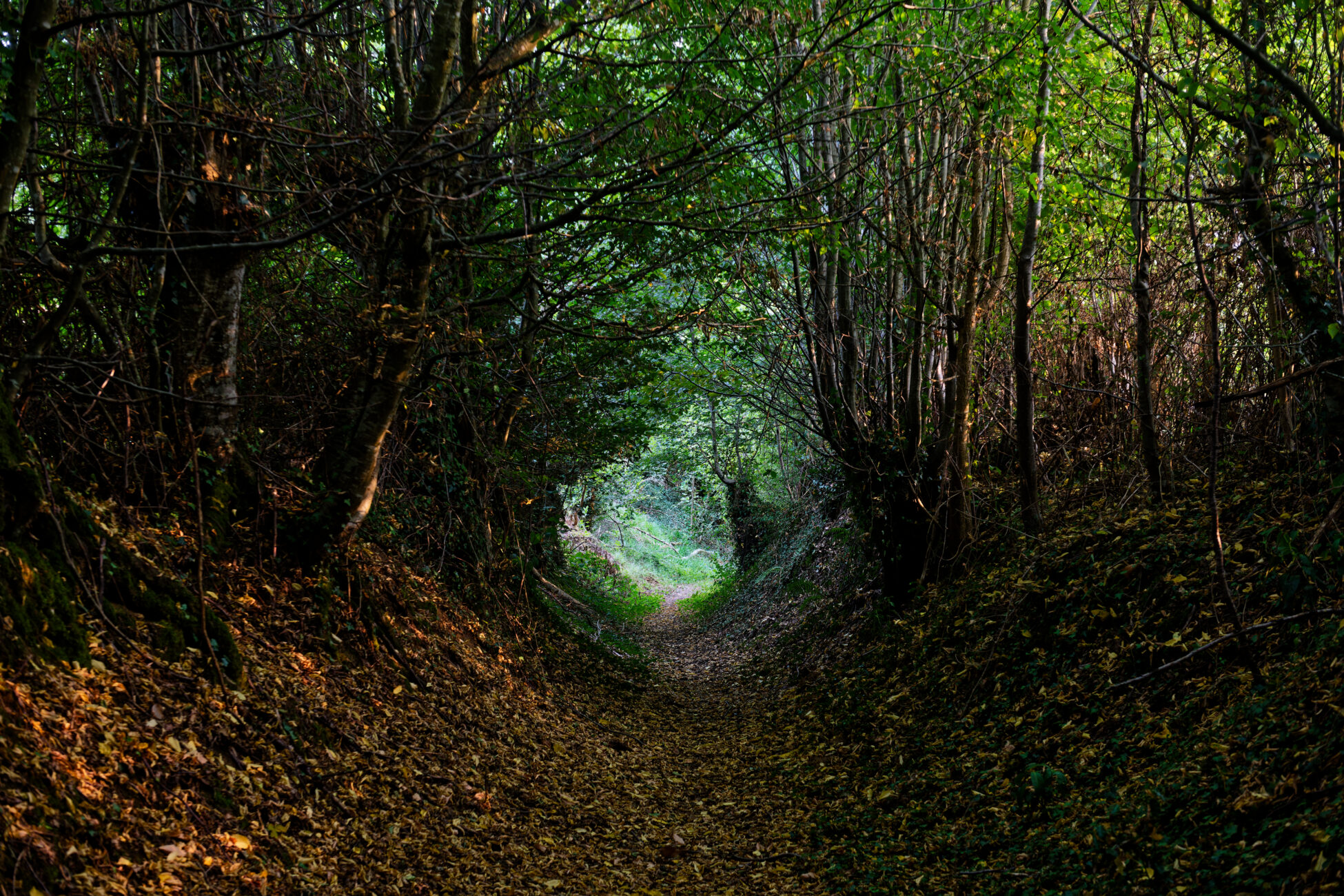
J'aimerais bien dédicacer cette photo à Alain Laboile, que je ne connais que par ses photos et par un court email auquel il a gentiment répondu : c'est lui (si on n'avait pas à peu près le même âge) qui aurait pu exprimer ce qu'était notre enfance dans ce paysage-là. Je le prends pour lui et le lui laisse : qu'il y mette ce qu'il veut !
Dans le slip de bain à l'élastique distendu qui nous servait d'unique vêtement pour tout l'été (en serviette-éponge, la trame seule ayant survécu à l'endroit des fesses) on s'éraflait à enchevêtrer des cabanes sur le haut du talus ou dans les profondes saignées des arbres malades, immenses vulves où poussaient des langues de bœufs. Au milieu de ce chemin, un élargissement, un cirque naturel où nous nous accrochions aux jeunes branches élastiques pour descendre, passant en deux secondes de l'air sec du champ proche aux exhalaisons humides d'humus. Une fois « rentrés », peu avant la reprise des cours, nous comparions l'épaisseur de la corne sous les pieds, faisions rouler comme de la pâte les épaisseurs de peaux mortes laissées par les coups de soleil. « On » : toute une tripotée de cousins et cousines.
Des années plus tard, E. a tenté de partager cela avec C., mais un enfant seul avec sa tante, ce n'est plus le même jeu : ils y ont inventé d'autres histoires qui m'échappent, puis d'autres jeux. La cabane a été abandonnée, mais un ou deux étés plus tard, en passant — c'est un rituel, ce chemin — j'ai retrouvé les vestiges : quelques branches superposées à l'horizontale, sur le haut du talus, avaient échappé au nuage poussiéreux de la débroussailleuse : le champ d'à côté n'avait mangé qu'une moitié de la haie protectrice.
En géographie, ça porte un nom : le bocage. Progressivement, impitoyablement détruit par l'agriculture intensive (pour gagner quelques mètres de pesticides, faire une marge supplémentaire). Le cimetière n'est pas loin, de l'autre côté du champ. J'ai renoncé à être incinéré : cette terre-là, la terre, n'importe quelle terre fera le travail plus naturellement qu'un four. Ce sera plus lent, ça disparaîtra plus lentement, l'épaisseur de ce temps aura peut-être un goût de joie dans une mémoire d'humain.
I would like to dedicate this photograph to Alain Laboile, whom I know only through his photographs and a short email to which he kindly replied: he is the one (had we not been roughly the same age) who could have expressed what our childhood was like in this landscape. I take it for him and leave it to him: let him make of it what he will!
In the swimming trunks with the stretched-out elastic that served as our only garment for the whole summer (terry cloth, the weave alone having survived where the buttocks went) we scraped ourselves tangling huts together on top of the embankment or in the deep gashes of sick trees, immense vulvas where ox-tongue mushrooms grew. Halfway along this path, a widening, a natural amphitheatre where we would grab the young springy branches to swing down, passing in two seconds from the dry air of the nearby field to the damp exhalations of humus. Once "back home", shortly before the start of term, we would compare the thickness of the calluses on our feet, roll like dough the layers of dead skin left by sunburn. "We": a whole pack of cousins.
Years later, E. tried to share this with C., but a child alone with his aunt is no longer the same game: they invented other stories there that escape me, then other games. The hut was abandoned, but one or two summers later, passing through — it's a ritual, this path — I found the remains: a few branches stacked horizontally, on top of the embankment, had escaped the dusty cloud of the brushcutter: the neighbouring field had eaten only one half of the sheltering hedge.
In geography, it has a name: bocage. Progressively, mercilessly destroyed by intensive agriculture (to gain a few metres of pesticides, make an extra margin). The cemetery is not far, on the other side of the field. I gave up the idea of being cremated: this earth here, the earth, any earth will do the work more naturally than an oven. It will be slower, it will disappear more slowly, and the thickness of that time may have a taste of joy in a human memory.
ฉันอยากอุทิศภาพนี้ให้อาแลง ลาบัวล์ (Alain Laboile) ที่ฉันรู้จักเพียงผ่านภาพถ่ายของเขาและอีเมลสั้นๆ ฉบับหนึ่งที่เขาตอบกลับมาอย่างอ่อนโยน เขาคือคนที่ (หากเราไม่ได้อายุรุ่นราวคราวเดียวกัน) น่าจะถ่ายทอดออกมาได้ว่าวัยเด็กของเราในภูมิทัศน์นั้นเป็นอย่างไร ฉันถ่ายภาพนี้แทนเขาและมอบให้เขา ให้เขาใส่อะไรลงไปก็ได้ตามใจ!
ในกางเกงว่ายน้ำที่ยางยืดหมดแรงซึ่งเป็นเสื้อผ้าชิ้นเดียวของเราตลอดทั้งฤดูร้อน (ผ้าขนหนูที่เหลือแต่เนื้อผ้าทอตรงก้น) เราถลอกไปทั่วตัวจากการขนกิ่งไม้มาพันสานเป็นกระท่อมบนสันคันดินสูง หรือในรอยแยกลึกของต้นไม้ป่วย ช่องอ้าขนาดใหญ่ราวกับโยนีที่มีเห็ดลิ้นวัวงอกอยู่ข้างใน กลางทางเดินนี้มีที่โล่งกว้างออก เป็นแอ่งธรรมชาติที่พวกเราเกาะกิ่งอ่อนที่ยืดหยุ่นแล้วโหนตัวลงไป ผ่านจากอากาศแห้งของท้องทุ่งใกล้ๆ ไปสู่ไอชื้นหอมกลิ่นดินใบไม้ผุในเวลาเพียงสองวินาที พอ "กลับบ้าน" แล้ว ไม่นานก่อนเปิดเทอม เราเอาหนังด้านใต้ฝ่าเท้ามาเทียบกันว่าของใครหนากว่า คลึงผิวหนังที่ลอกจากแดดเผาเป็นแผ่นๆ เหมือนนวดแป้ง "เรา" : ลูกพี่ลูกน้องมาเป็นฝูงทั้งชายหญิง
หลายปีต่อมา E. พยายามแบ่งปันสิ่งนี้กับ C. แต่เด็กคนเดียวกับป้า มันไม่ใช่การเล่นแบบเดียวกันอีกแล้ว พวกเขาแต่งเรื่องอื่นขึ้นมาในที่นั้น เรื่องที่ฉันไม่รู้ แล้วก็เปลี่ยนไปเล่นอย่างอื่น กระท่อมถูกทิ้งร้าง แต่อีกหนึ่งหรือสองฤดูร้อนต่อมา ขณะเดินผ่าน — มันเป็นพิธีกรรม ทางเดินนี้ — ฉันเจอซาก กิ่งไม้สองสามกิ่งวางซ้อนกันในแนวนอนบนสันคันดิน รอดจากฝุ่นคลุ้งของเครื่องตัดหญ้า ทุ่งข้างๆ กินรั้วต้นไม้ที่คอยปกป้องไปแค่ครึ่งเดียว
ในวิชาภูมิศาสตร์ มันมีชื่อเรียก : โบกาจ (bocage) — แนวพุ่มไม้และคันดินที่แบ่งผืนนาออกเป็นแปลง ถูกทำลายอย่างค่อยเป็นค่อยไปแต่ไร้ความปรานีโดยเกษตรกรรมเชิงอุตสาหกรรม (เพื่อได้พื้นที่ฉีดยาฆ่าแมลงเพิ่มอีกไม่กี่เมตร ทำกำไรเพิ่มอีกนิด) สุสานอยู่ไม่ไกล อีกฟากหนึ่งของทุ่ง ฉันเลิกคิดจะเผาศพตัวเอง ดินตรงนี้ ดิน ดินที่ไหนก็ได้จะทำหน้าที่ได้เป็นธรรมชาติกว่าเตาเผา มันจะช้ากว่า จะสลายช้ากว่า ความหนาของเวลานั้นอาจจะมีรสของความสุขอยู่ในความทรงจำของมนุษย์สักคน