Big Mouth
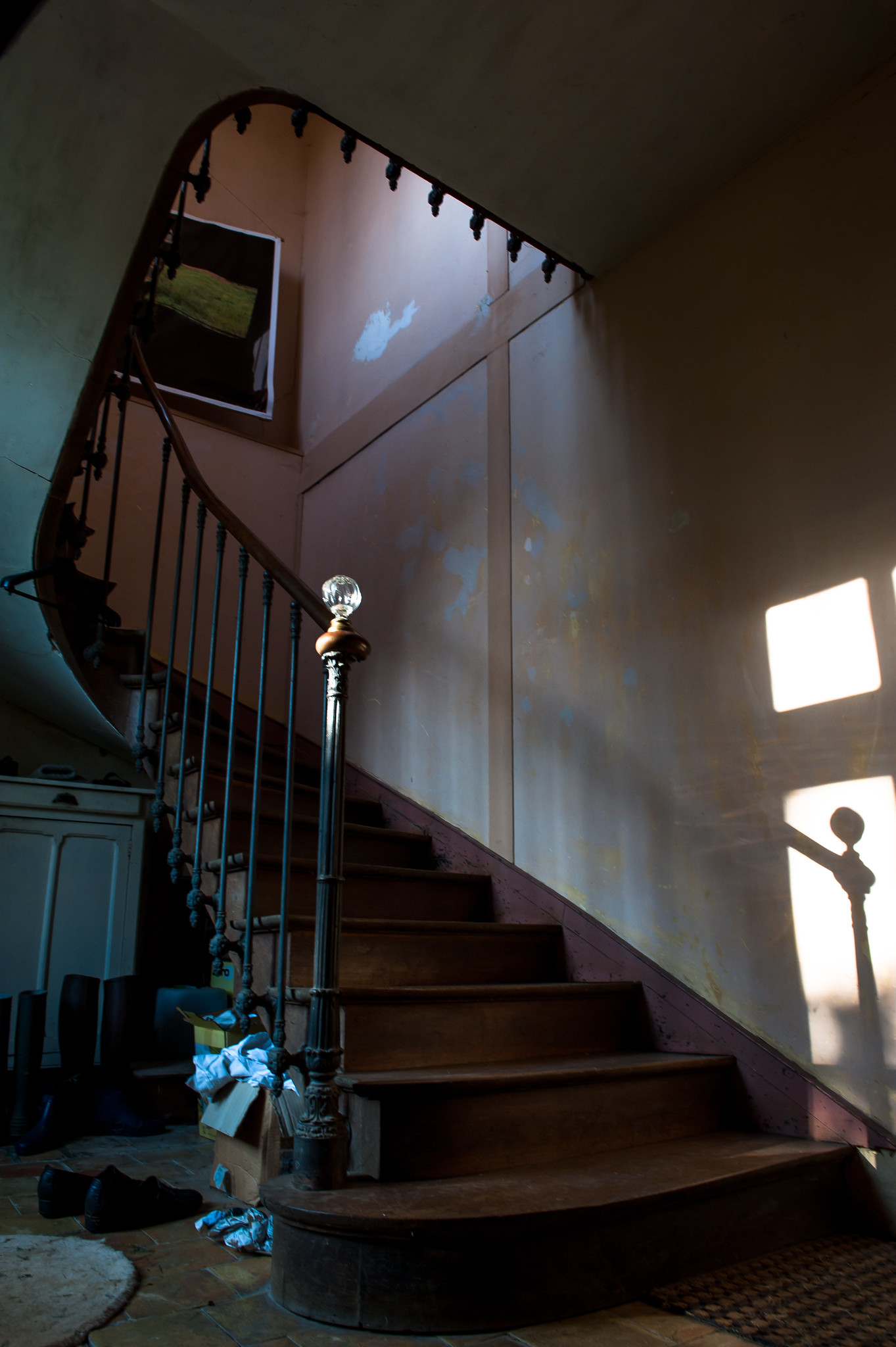
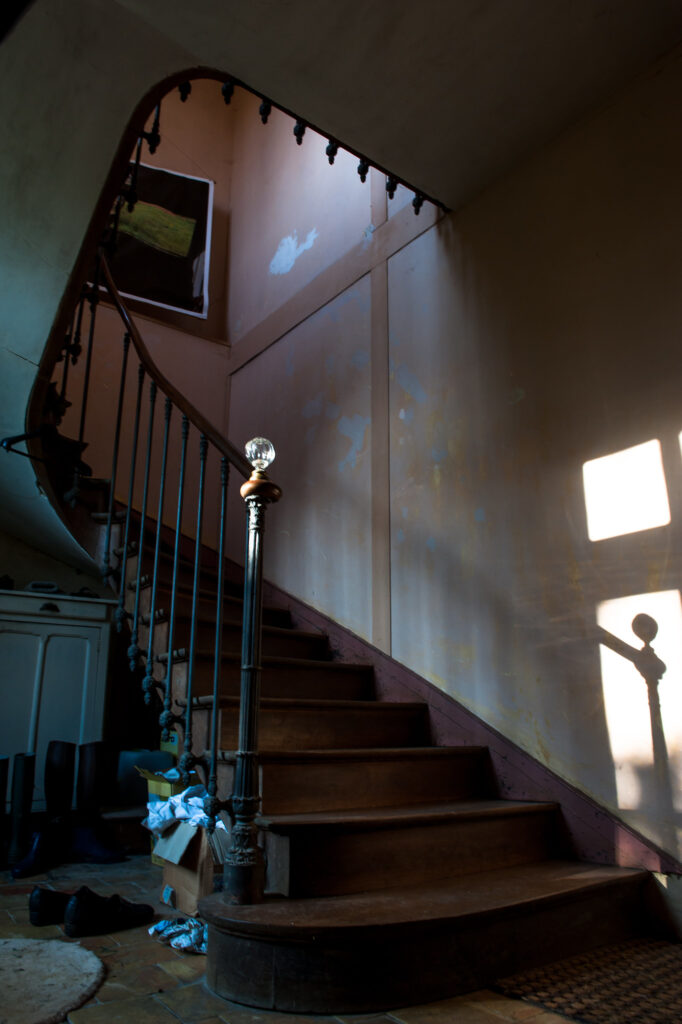
Elle me fait penser à la « grande hache de l'histoire » de Perec, cette grande bouche avide : c'est l'escalier de derrière du « château » (un probable abri de chasse devenu tel, d'extension en extension, jusqu'à l'ajout d'un « donjon » au XIXe siècle). Depuis la pièce centrale, on y accède en traversant une sorte de placard, de cage obscure entre deux portes installées dans les anciens premiers murs. À chaque passage, on referme l'une avant d'ouvrir l'autre en faisant grincer deux mécanismes : bruit de ferraille rayée, bruit de bois. Toujours fermées pour prévenir les courants d'air, elles rappellent que les morts, leurs silhouettes, habitent encore l'épaisseur de la pierre et du temps.
On arrive dans une petite entrée de plain-pied avec le champ de derrière et qui mêle l'odeur du carrelage mouillé à celle, soufrée, de bottes en caoutchouc. C'est là que s'élève cet escalier, survolant un buffet, un portemanteau couvert d'imperméables et des outils qu'on n'a pas encore rangés. Quand on revient pieds nus de la salle de bain, on ramasse toujours un peu de la poussière accumulée dans les angles les plus aigus. À mi-volée, on longe un mur en retrait qui servait autrefois de tablette : douilles d'obus martelées et sculptées, souvenirs de la guerre 14, portraits d'anciens posant devant une « torpedo sport »... Ce furent mes premiers contacts avec l'idée de guerre : on montait vers la chambre longtemps fermée à clé par ma grand-mère, où elle avait entreposé les souvenirs de son père après sa mort, cet arrière-grand-père que je n'ai jamais connu. En pays sarthois où s'inventaient les voitures à moteur, il avait conçu à 21 ans un vélo, « la Fertoise », qui avait fait le tour de France en 1910, ou encore une machine à bras pour boucher le vin dont mon père se sert encore. Recruté en 14 comme mécanicien et chauffeur (?), affecté je crois aux véhicules de Pétain, il avait ensuite aveuglément suivi son idole en 39, maintenant ses activités au Perreux, collaborant avec les Allemands, avant de perdre ses droits civiques et de faire un passage par Fresnes... tandis que mon grand-père, son gendre (jamais connu lui non plus) avait refait sa vie avec une autre au début de la guerre, laissant ma grand-mère et ses trois enfants — dont ma mère. La tache de la collaboration, invisible dans l'escalier, avait été mise à l'abri des regards par ma grand-mère dans une grosse malle du grenier (confiée plus tard à un historien ami de la famille) : des notes intimes de sa cavale à vélo, à la Libération, depuis la banlieue de Paris jusqu'à la Sarthe, des souches de carnets de chèques, et surtout une sorte de « musée » contre le flétrissement, impossible à ses yeux, de la gloire de Pétain.
L'escalier qui, soutenu par une poutre vermoulue de la cave, menaçait de s'écrouler, a été réparé par mon grand frère au prix de gros travaux. Aujourd'hui mon père monte encore à petits pas cet escalier pour rejoindre ma mère dans la chambre qu'ils partagent en été.
It reminds me of Perec's "great AXE of history," this greedy big mouth: it is the back staircase of the "château" (probably a hunting lodge that became one, extension by extension, up to the addition of a "keep" in the nineteenth century). From the main room, you reach it by crossing a sort of cupboard, a dark cage between two doors set into the original first walls. Each time you pass through, you close one before opening the other, making two mechanisms grind: the sound of scraped metal, the sound of wood. Always kept shut to prevent draughts, they remind you that the dead, their silhouettes, still inhabit the thickness of the stone and of time.
You arrive in a small entrance, level with the field out back, where the smell of wet tiles mingles with the sulphurous smell of rubber boots. It is there that this staircase rises, soaring over a sideboard, a coat stand draped in raincoats, and tools that haven't been put away yet. When you come back barefoot from the bathroom, you always pick up a little of the dust accumulated in the sharpest angles. Halfway up the flight, you pass along a recessed wall that once served as a shelf: hammered and carved shell casings, souvenirs of the 1914 war, portraits of elders posing in front of a "torpedo sport"… These were my first encounters with the idea of war: you climbed towards the bedroom long kept locked by my grandmother, where she had stored the belongings of her father after his death, this great-grandfather whom I never knew. In the Sarthe country, where motor cars were being invented, he had designed at the age of twenty-one a bicycle, "la Fertoise," which had ridden the Tour de France in 1910, and also a hand-operated machine for corking wine that my father still uses. Conscripted in 1914 as a mechanic and driver (?), assigned I believe to Pétain's vehicles, he had then blindly followed his idol in 1939, maintaining his business in Le Perreux, collaborating with the Germans, before losing his civil rights and doing a stint in Fresnes… while my grandfather, his son-in-law (never known either), had started a new life with another woman at the beginning of the war, leaving my grandmother and her three children — my mother among them. The stain of collaboration, invisible on the staircase, had been hidden from sight by my grandmother in a large trunk in the attic (later entrusted to a historian, a friend of the family): private notes from his escape by bicycle, at the Liberation, from the outskirts of Paris to the Sarthe, chequebook stubs, and above all a sort of "museum" against the withering — unthinkable in his eyes — of the glory of Pétain.
The staircase, held up by a worm-eaten beam in the cellar, was threatening to collapse and was repaired by my older brother at the cost of major work. Today my father still climbs this staircase step by small step, to join my mother in the bedroom they share in summer.
มันทำให้นึกถึง « ขวานใหญ่แห่งประวัติศาสตร์ » ของเปเร็ก — ปากใหญ่ที่โลภโมนี้ : มันคือบันไดหลังบ้านของ « ปราสาท » (น่าจะเป็นกระท่อมล่าสัตว์ที่กลายมาเป็นเช่นนั้น ต่อเติมแล้วต่อเติมอีก จนมีการสร้าง « หอคอย » ในคริสต์ศตวรรษที่ 19) จากห้องกลาง เข้าถึงได้โดยลอดผ่านตู้เสื้อผ้าชนิดหนึ่ง กรงมืดระหว่างประตูสองบานที่ติดตั้งอยู่ในกำแพงเดิมชั้นแรก ทุกครั้งที่ผ่าน ปิดบานหนึ่งก่อนเปิดอีกบาน ทำให้กลไกสองชุดส่งเสียงเอี๊ยด: เสียงเหล็กขูด เสียงไม้ ปิดอยู่เสมอเพื่อกันลมโกรก ย้ำเตือนว่าคนตาย เงาร่างของพวกเขา ยังคงอาศัยอยู่ในความหนาของหินและของกาลเวลา
มาถึงทางเข้าเล็กๆ ระดับเดียวกับทุ่งด้านหลัง กลิ่นกระเบื้องเปียกผสมกับกลิ่นกำมะถันของรองเท้าบูทยาง ตรงนั้นเองที่บันไดยกตัวขึ้น ลอยเหนือตู้ไม้ ราวแขวนเสื้อที่คลุมด้วยเสื้อกันฝน และเครื่องมือที่ยังไม่ได้เก็บ เวลาเดินเท้าเปล่ากลับจากห้องน้ำ เท้าจะเก็บฝุ่นที่สะสมในมุมแหลมที่สุดมาเสมอ ขึ้นมาครึ่งช่วง เดินเลาะผนังที่เว้าเข้าไปซึ่งเคยใช้เป็นชั้นวางของ: ปลอกกระสุนปืนใหญ่ตอกและแกะสลัก ของที่ระลึกจากสงคราม ค.ศ. 1914 ภาพบรรพบุรุษยืนโพสต์หน้ารถ « ตอร์ปิโด สปอร์ต »... นี่คือการสัมผัสครั้งแรกของผมกับความคิดเรื่องสงคราม: เดินขึ้นไปสู่ห้องนอนที่ย่าล็อกกุญแจไว้นาน ซึ่งเธอเก็บข้าวของของพ่อไว้หลังเขาเสีย ปู่ทวดคนนี้ที่ผมไม่เคยรู้จัก ในแดนซาร์ตที่กำลังประดิษฐ์รถยนต์ เขาออกแบบจักรยานตอนอายุ 21 ปี ชื่อ « ลาแฟร์ตัวซ์ » ที่เคยวิ่งตูร์เดอฟร็องซ์เมื่อปี ค.ศ. 1910 และยังสร้างเครื่องอัดจุกไวน์แบบมือหมุนที่พ่อผมยังใช้อยู่ ถูกเกณฑ์ในปี ค.ศ. 1914 เป็นช่างกลและคนขับ (?) ประจำกองยานยนต์ของเปแต็งถ้าจำไม่ผิด แล้วก็ตามรูปเคารพของเขาอย่างหลับหูหลับตาในปี ค.ศ. 1939 ยังคงดำเนินกิจการที่เลอแปร์เรอ ร่วมมือกับเยอรมัน ก่อนจะถูกถอนสิทธิพลเมืองและถูกจำคุกที่เฟรนส์... ขณะที่ปู่ของผม ลูกเขยของเขา (ไม่เคยรู้จักเช่นกัน) เริ่มต้นชีวิตใหม่กับผู้หญิงอีกคนตั้งแต่ต้นสงคราม ทิ้งย่ากับลูกสามคน — หนึ่งในนั้นคือแม่ของผม รอยด่างของการร่วมมือกับข้าศึก มองไม่เห็นบนบันได ถูกย่าซ่อนไว้ในหีบใหญ่ที่ห้องใต้หลังคา (ต่อมามอบให้นักประวัติศาสตร์เพื่อนของครอบครัว): บันทึกส่วนตัวจากการหลบหนีด้วยจักรยานตอนปลดปล่อย จากชานเมืองปารีสถึงซาร์ต ต้นขั้วสมุดเช็ค และเหนืออื่นใด « พิพิธภัณฑ์ » ชนิดหนึ่งเพื่อต่อต้านการเหี่ยวเฉา — ซึ่งเป็นไปไม่ได้ในสายตาเขา — ของเกียรติยศเปแต็ง
บันไดที่ค้ำยันด้วยคานผุจากห้องใต้ดิน เคยใกล้จะพังทลาย ถูกซ่อมแซมโดยพี่ชายคนโตด้วยงานใหญ่โต วันนี้พ่อของผมยังคงก้าวขึ้นบันไดนี้ทีละก้าวเล็กๆ ไปหาแม่ของผมในห้องนอนที่พวกเขาใช้ร่วมกันในฤดูร้อน